
 English
 中文简体
中文简体


Haven’t Found The Products You Want?
Enter your email...
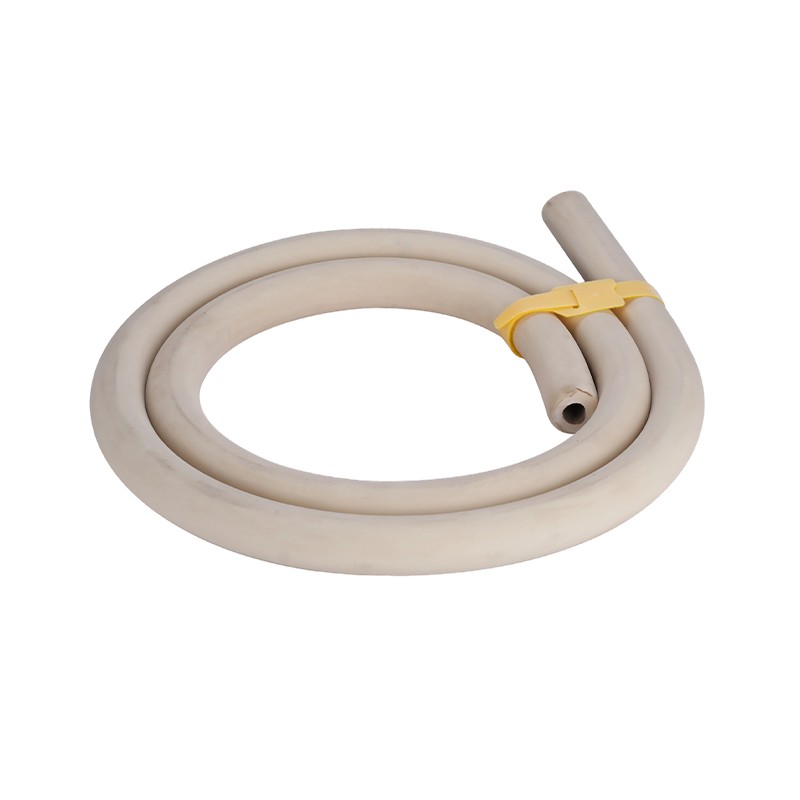
High-flexibility, low-permeability chemical-resistant vacuum hoses are high-performance hoses specifically designed for industrial vacuum systems and the transport of chemical media. They utilize a PTFE liner or high-performance polymer materials, combined with a reinforced layer structure, to achieve good chemical resistance and low gas permeability, allowing for the safe transport of acids, bases, organic solvents, and other media. The high-flexibility design allows the hose to bend easily in confined spaces and complex piping systems, facilitating installation and operation. This type of hose is widely used in the chemical, pharmaceutical, semiconductor, and vacuum equipment industries, improving system stability and safety while extending service life.
Technological Innovation: A Dual Breakthrough in Flexibility and Chemical Resistance
The advantages of high-flexibility, low-permeability chemical-resistant vacuum hoses are primarily reflected in their materials and structural design. These hoses typically use a high-performance polymer inner layer, such as PTFE (polytetrafluoroethylene), combined with a metal or fiber reinforcement layer, giving them good chemical resistance and remarkable stability when in contact with corrosive media such as acids, bases, and solvents. Due to its good chemical inertness and extremely low permeability, PTFE material is widely used in the manufacture of hoses for high-standard industries such as food, pharmaceuticals, and chemicals.
The chemical stability of the inner layer material also ensures lower gas permeability in high-vacuum environments, which is crucial for the stable operation of vacuum systems. In some high-precision experiments and vacuum pump applications, the permeability of the hose directly affects the small achievable vacuum level of the device. The introduction of PTFE or similar low-permeability materials effectively reduces the risk of media leakage and external gas infiltration, thereby improving overall system performance.
At the same time, to ensure the flexible maneuverability of the hose in complex installation environments, a high-flexibility design is widely adopted. These hoses can be laid out with small bending radii in confined spaces, which simplifies equipment piping planning and improves assembly efficiency. In many industrial settings, this feature significantly reduces construction difficulty and maintenance costs.
Expanding Industry Applications
High-flexibility, low-permeability chemical-resistant vacuum hoses have a wide range of applications. Typical scenarios include chemical transport, vacuum system connections, exhaust gas extraction and transmission, laboratory equipment piping, and semiconductor manufacturing processes. In chemical transfer systems, these hoses are commonly used to connect equipment such as pumps, containers, and reactors, and are designed to withstand the challenges of long-term transfer of strong acids, bases, and organic solvents. Compared to traditional rubber hoses, PTFE-lined hoses not only offer higher corrosion resistance but also tolerate a wider temperature range and have a longer service life.
Furthermore, vacuum applications have strict requirements for the vacuum retention performance of hoses. For example, in high-vacuum pump systems and vacuum furnace pipelines, if the hose has gas permeation or leakage problems, it will not only reduce the efficiency of the pump but also affect product quality. Using low-permeability vacuum hoses can significantly improve the system's vacuum retention capabilities, meeting the demanding requirements of precision manufacturing and scientific research equipment.
In modern industrial settings, highly flexible vacuum hoses are also commonly used in mobile equipment such as vacuum cleaning vehicles or portable suction devices. Their soft and flexible characteristics make operation more convenient, reducing manual intervention and equipment adjustment time.
Market Demand Growth and Technological Trends
As global manufacturing continues to transform, various industrial equipment places higher demands on hose systems. In the petrochemical, life sciences, environmental engineering, and new energy industries, the demand for chemical-resistant, low-permeability, and highly flexible hoses is continuously rising.
Industry observers point out that market attention to high-performance hose products has increased significantly in recent years. Several hose manufacturers are accelerating product technology upgrades, not only optimizing material performance but also combining modular design concepts to launch solutions that can be customized in length, interfaces, and temperature ratings according to on-site needs.
The future development direction of highly flexible, low-permeability, chemical-resistant vacuum hoses will include intelligent monitoring, composite new materials, and sustainable manufacturing. By integrating pressure and temperature sensors inside the hose, the hose status can be monitored in real time, improving the system's early warning capabilities and extending its service life. In addition, the application of new environmentally friendly materials will also reduce the environmental impact of hose production and disposal.
Hose Safety and Maintenance Suggestions
Although highly flexible, low-permeability, chemical-resistant vacuum hoses have good performance, the following points should still be noted in actual use:
These maintenance measures help reduce equipment downtime and the risk of system failures, thereby improving overall production efficiency.

1B, Phase 1, Liandong U Valley Linhai Intelligent Industrial Park, Jiangnan Street, Linhai City, Zhejiang, China.
Xiaaoyu, Jiangnan Street, Linhai City, Zhejiang, China.
Copyright © Taizhou Yonghao Vacuum Equipment Co., Ltd.
Vacuum Pump Factory


